The 10-Minute Missed-Call Rescue Plan: How AI Receptionists Help Local Service Businesses Turn Unanswered Calls Into Booked Jobs
The Silent Profit Killer in Your Service Business
Picture this scenario: You are under a sink troubleshooting a stubborn leak, up on a roof finishing a shingle replacement, or in a treatment room with a patient. Your cell phone vibrates in your pocket. You cannot answer it immediately. Ten seconds later, the call goes to voicemail.
What happens next?
If you think that caller will leave a message and wait patiently for a callback two hours later, market statistics tell a very different story. Industry benchmark data reveals that up to 62 percent of incoming phone calls to local service businesses go unanswered during peak operating hours and after-hours combined. Worse still, research published by Harvard Business Review shows that nearly 78 percent of customers end up hiring the first service provider who actually responds to their inquiry.
When a homeowner has a burst pipe, a broken furnace in mid-January, or an urgent dental need, they do not leave voicemails. They hang up and press the next phone number on Google. Every unanswered call is effectively a crisp $500 or $1,500 bill handed directly to your top local competitor.
Why Traditional Call Handling Methods Fall Short
For decades, local contractors, clinics, and independent operators relied on three primary options to handle customer calls:
- Standard Voicemail: Modern consumers rarely leave voicemails. They view voicemail as a digital black hole where inquiries go to die.
- In-House Receptionists: Front-desk staff are invaluable, but they can only answer one line at a time. During peak morning hours or when staff step away for lunch, incoming calls slip through the cracks. Furthermore, hiring full-time staff for weekend and evening coverage is cost-prohibitive for most small businesses.
- Traditional Answering Services: Third-party call centers often rely on scripted operators who lack deep knowledge of your operational schedule or trade jargon. Messages are taken down and emailed to you hours later, leaving the lead cold by the time you receive it.
To bridge this gap without blowing up your payroll, forward-thinking operators are adopting a modern framework: the 10-Minute Missed-Call Rescue Plan.
The 10-Minute Missed-Call Rescue Plan
Speed-to-lead is the single most critical variable in modern local service sales. Lead response studies consistently indicate that responding to an inquiry within five minutes increases conversion rates by over 300 percent compared to responding after 30 minutes.
The 10-Minute Missed-Call Rescue Plan is a practical operational framework designed to ensure no caller is left hanging, regardless of when they reach out. Here is how the process works in practice:
Step 1: Immediate AI Voice Pickup
When your line rings and your team cannot answer within three rings, an intelligent AI receptionist takes the call instantly. Unlike outdated phone menus that force callers through endless button prompts, voice AI engages in natural, fluid conversation. It understands service context, answers common FAQs regarding service areas and pricing structures, and maintains a warm, professional tone.
Step 2: Instant Automated Text-Back
If a caller hangs up before engaging or lands on a busy line, an automated text message drops into their SMS inbox within 30 seconds. A simple text such as, "Sorry we missed your call! This is [Business Name]. How can we help you today?" immediately stops the customer from closing your text window to call the next company on Search results.
Step 3: Automated Intake and Qualification
Whether through voice AI or SMS text-back, the platform collects essential job information right away. It gathers the caller's physical address, the nature of their issue, and the level of urgency. This replaces manual intake forms and eliminates back-and-forth phone tag.
Step 4: Real-Time Calendar Booking
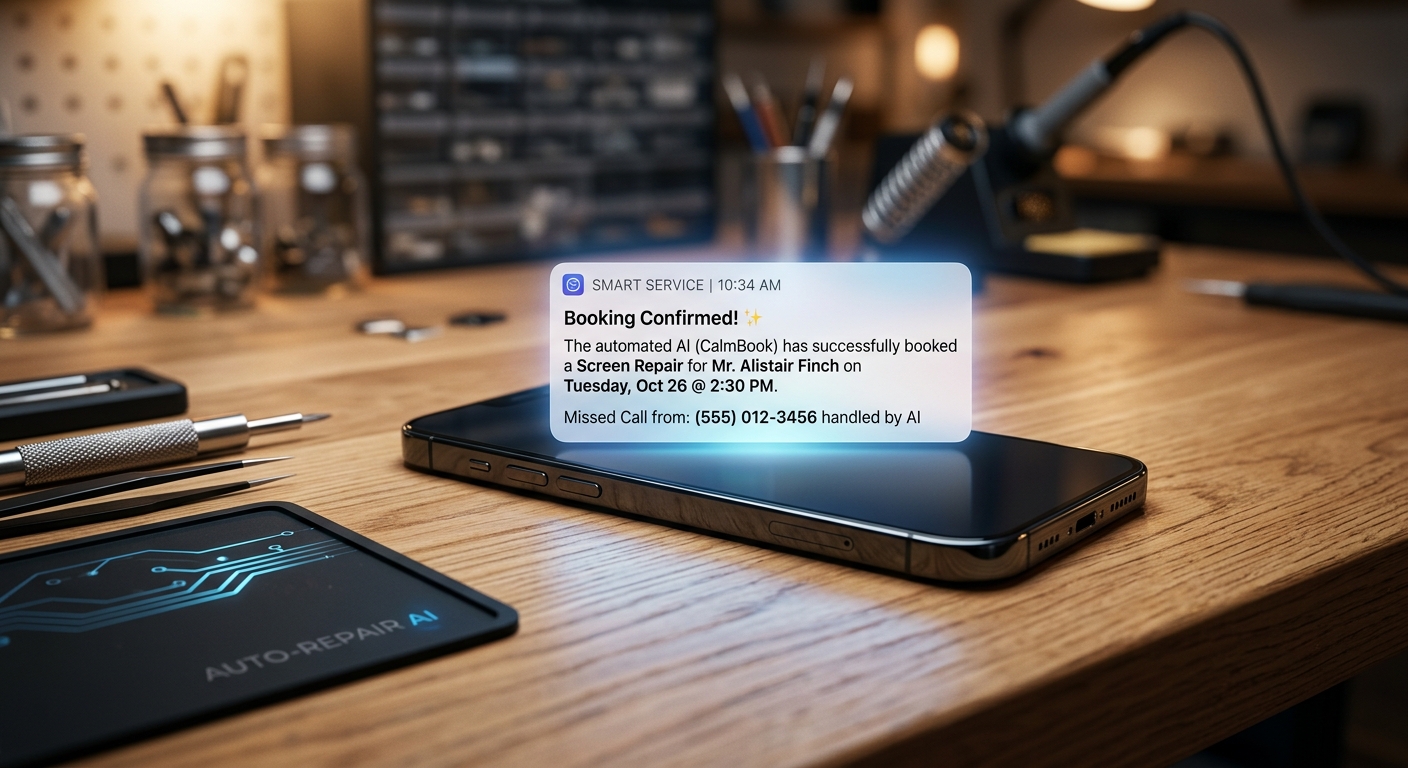
Instead of taking down a message for a delayed callback, the system integrates directly with your dispatch or booking calendar. It offers available time slots, confirms appointments instantly, and sends confirmation texts to both the customer and your field technicians.
Real-World Scenarios: Turning Missed Calls Into Revenue
To see the financial impact of this plan, consider two common operational scenarios:
Scenario A: The 8:30 PM Emergency A homeowner notices their water heater leaking on a Sunday evening. They call an independent plumbing contractor. Under traditional operations, the call goes to a generic voicemail. The homeowner hangs up, calls a competitor, and books a $1,200 emergency replacement.
With the rescue plan active, an AI receptionist answers on the second ring, reassures the homeowner, assesses the urgency, books a first-thing Monday morning appointment, and sends the job details to the owner's dashboard. The $1,200 job is secured before the contractor finishes dinner.
Scenario B: The Midday Rush An electrical contracting shop receives four incoming calls at 10:00 AM while the front-desk manager is checking in a walk-in client and answering another line. Three calls go unaddressed.
With automated lead capture running in the background, the AI system picks up the secondary lines simultaneously, answers questions about service estimates, and logs two scheduled service calls straight into the dispatch software.
Practical Takeaways for Service Operators
If you want to plug the revenue leaks in your service business today, begin with these operational shifts:
- Audit Your Response Time: Call your own primary business line during peak hours and after hours. Experience what a prospective customer experiences.
- Stop Relying on Voicemail: Transition away from traditional voicemail systems that create delays and frustrate modern consumers.
- Unify Communication Channels: Ensure that missed calls, text messages, and website inquiries route into a single central dashboard so leads do not get lost between platforms.
- Automate Scheduling: Give potential customers the ability to secure an appointment spot immediately during their first contact.
Never Let Another High-Value Lead Slip Through the Cracks
Your marketing efforts cost real money, whether you invest in local search optimization, print flyers, or pay-per-click advertising. Generating a caller only to lose them to a missed phone call is the most expensive mistake a local business can make.
By adopting intelligent AI phone-answering and website-chatbot tools, you can ensure your business operates 24/7/365 without increasing your headcount. An automated response system captures every call, answers routine questions, and books appointments on autopilot, allowing you to focus on delivering great service while your schedule stays full.
Ready to transform your incoming calls into locked-in jobs? Explore how an AI phone-answering and website-chatbot platform can protect your revenue, improve your customer experience, and ensure no lead goes unanswered ever again.