Stop Missing Revenue: How AI Virtual Receptionists Keep Service Businesses Booked Solid
It is 2:15 PM on a Tuesday. You are deep under a kitchen sink, standing on a ladder fixing an electrical panel, or sitting in a consultation with a patient. Your cell phone vibrates in your pocket. It is a new inquiry, a prospective customer looking for an immediate repair or quote.
You cannot answer right now. You figure you will call them back in twenty minutes when you finish up. But by the time you step outside, check your voicemail, and dial the number, the prospective customer has already called the next provider on Google. They have booked the job, paid a deposit, and moved on with their day.
This scenario plays out thousands of times every single day across home services, clinics, and local contractors. In the modern service economy, a missed call is not just a minor inconvenience. It is a direct leak in your gross revenue.
The True Cost of Unanswered Calls and Slow Follow-Up
Industry research consistently highlights a harsh reality for local service operators. Studies show that roughly 62% of phone calls to small service businesses go completely unanswered. When consumers reach a voicemail greeting, over 80% hang up without leaving a message. They simply do not have the patience to wait for a callback.
The primary driving metric in local sales today is speed to lead. Research published by Harvard Business Review revealed that companies attempting to contact potential customers within five minutes of an inquiry are nearly one hundred times more likely to connect and qualify the lead than those who wait thirty minutes. Furthermore, research indicates that up to 78% of customers ultimately hire the service provider that responds to their inquiry first.
When you break down the math, the loss becomes alarming:
- An average service ticket of $400 to $1,500.
- Three missed calls per day.
- A 50% conversion rate on answered calls.
That simple equation represents over $600 to $2,250 in lost top-line revenue every single day. Over the course of a single calendar year, that equates to tens of thousands of dollars left on the table simply because no one was available to pick up the phone.
Why Traditional Solutions Fall Short
For years, business owners tried to solve this problem using standard methods, but each carries significant operational flaws:
- Traditional Voicemail: Modern consumers dislike voicemail. It feels like a black hole where requests go to die. Most caller behavior has shifted toward instant confirmation.
- In-House Receptionists: Hiring full-time office personnel works during normal business hours, but it comes with fixed payroll expenses, benefits, management overhead, and coverage gaps during lunch breaks or sick days.
- Third-Party Call Centers: Human answering services often suffer from inconsistent quality, high staff turnover, lack of detailed industry knowledge, and hefty per-minute fees that escalate quickly during peak seasons.
Additionally, none of these options adequately cover the massive volume of after-hours traffic. Industry data reveals that roughly 35% to 40% of customer service inquiries occur outside standard 8 AM to 5 PM operating hours. Home emergencies, routine maintenance planning, and online local searches happen late in the evening when owners are resting.
The Rise of 24/7 AI-Powered Lead Capture
To close these costly operational gaps, forward-thinking service businesses are turning toward AI-powered phone answering and web-based interaction systems. Recent coverage in outlets like Markets Insider highlights how automated voice receptionists are changing the unit economics for small local enterprises.
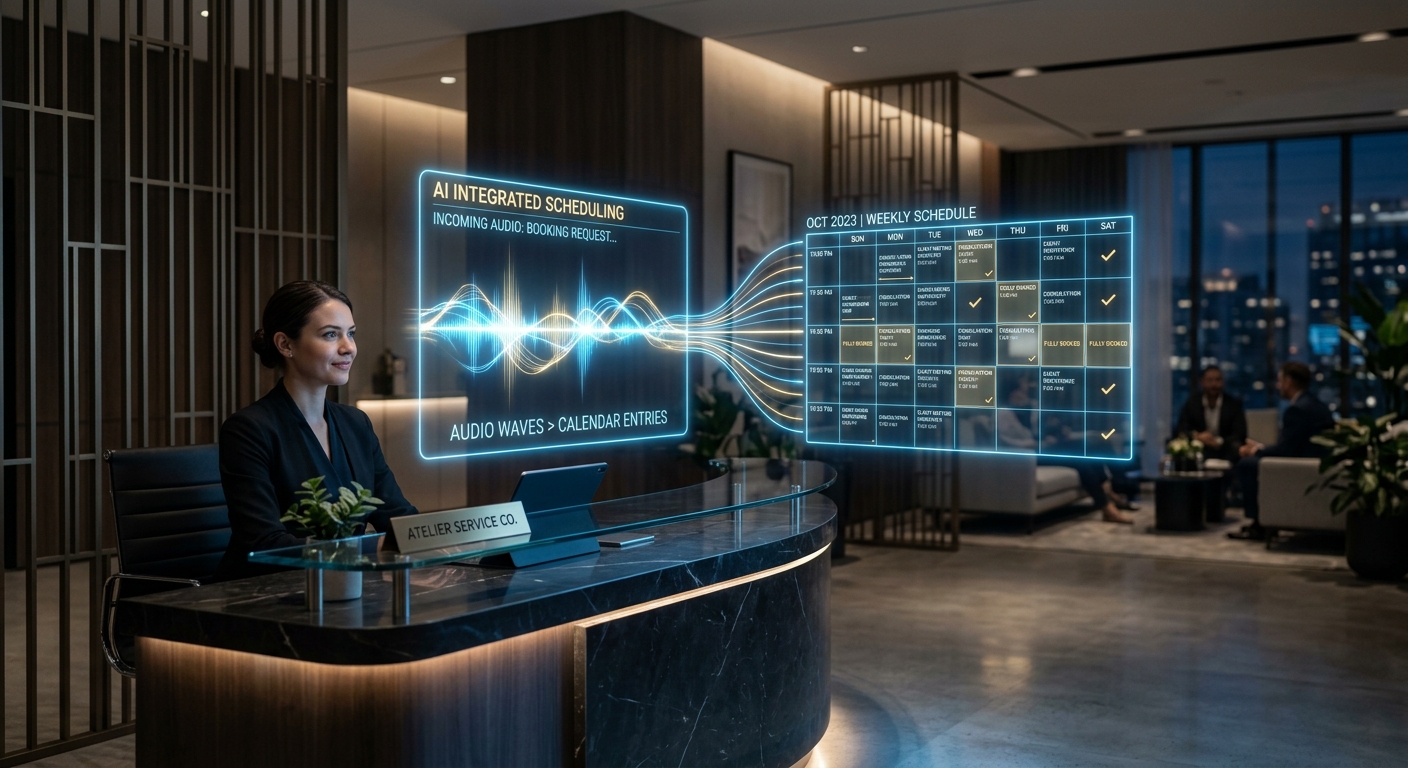
Unlike old, frustrating press-1-for-sales interactive voice response menus, modern AI voice platforms operate using natural conversational dialogue. They can instantly pick up calls on the first ring, understand complex customer queries, collect specific job details, and sync directly into a scheduling calendar or field service CRM.
Key benefits include:
- Zero Wait Times: Calls are picked up immediately, eliminating customer frustration.
- Intelligent Qualification: The system asks tailored questions to determine job type, location, and urgency.
- Continuous Operation: Calls received at 11:00 PM on a Sunday are handled with the same accuracy and warmth as calls received at 10:00 AM on a Tuesday.
- Integrated Web Chat: Beyond phone calls, automated website assistants can converse with online visitors, answer common questions, and convert digital traffic into booked appointments.
Practical Steps to Stop Losing Revenue Today
If you want to plug the leaks in your customer intake process, start with these actionable steps:
First, audit your missed call data. Look at your phone carrier logs or office phone system reports over the last thirty days. Identify how many calls arrived during peak service hours versus after-hours, and note how many went to voicemail.
Second, calculate your response time. Measure how long it currently takes your team to respond to web form submissions or unanswered phone calls. If your average response time is longer than five minutes, you are giving away market share to quicker competitors.
Third, establish instant-response workflows. Implement automated text-back systems for missed calls and deploy smart intake tools across your online channels so every prospect receives immediate engagement.
Secure Every Booking and Grow Your Business
Your field technicians, clinical staff, and specialized service professionals should spend their days doing what they do best, serving clients and completing high-value work, not constantly stressing over missed phone calls or scrambling to return messages at the end of an exhausting day.
By adopting a modern AI phone-answering and website-chatbot platform, you ensure that every incoming call is answered promptly, every customer inquiry is captured with precision, and new jobs are booked directly into your schedule 24/7. Never let another high-value customer slip away to a competitor simply because you were busy working.