How Emergency HVAC Contractors Handle 2 AM Service Calls Automatically
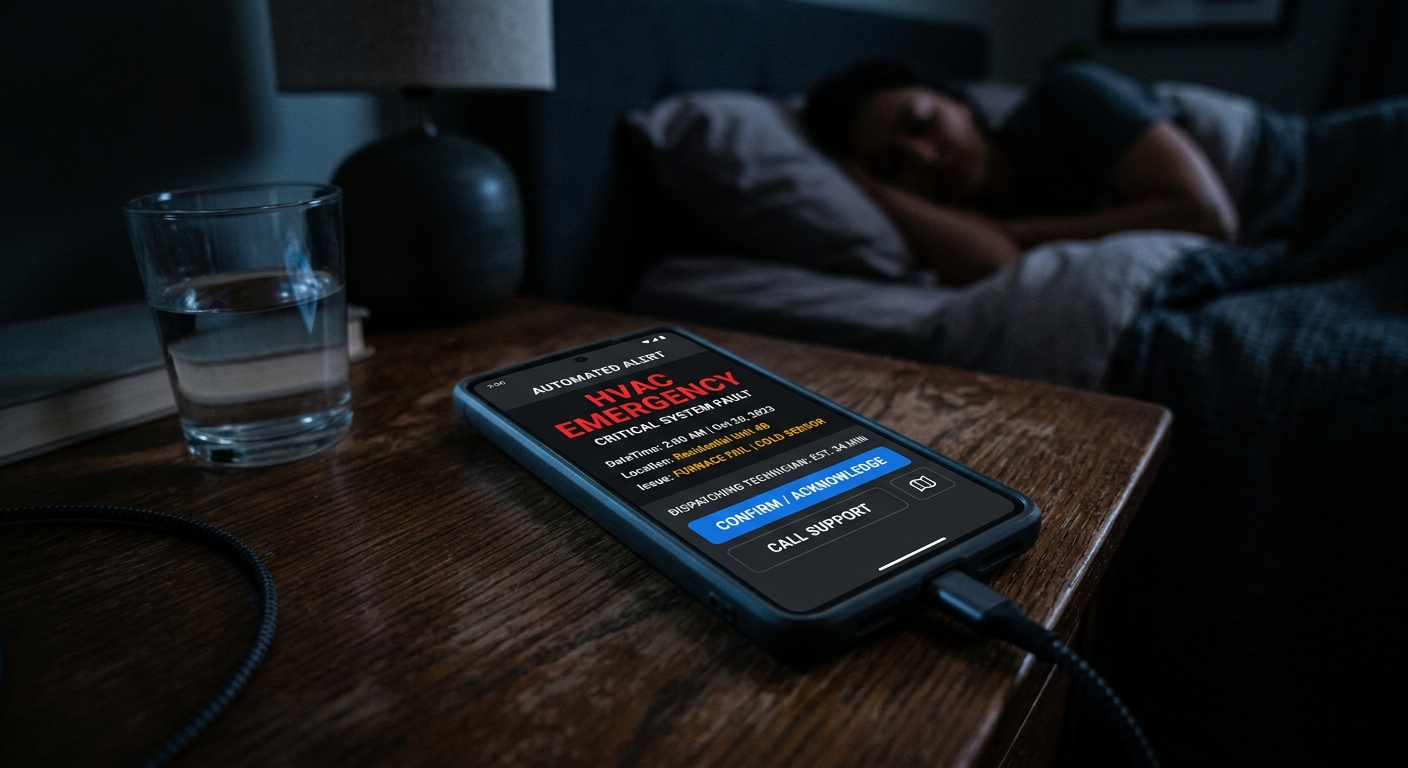
It is 2:15 AM in the middle of January. Outside, the temperature has dropped into the single digits. Inside a local home, a furnace sputters, clicks three times, and goes dead cold. The homeowner wakes up shivering, checks the thermostat, and panics. They grab their phone, search for emergency furnace repair, and hit the first call button they see.
If that phone call hits your business line, what happens next determines whether you earn a $1,200 emergency service ticket or give it directly to your top competitor down the street.
For most HVAC contractors and home service operators, after-hours dispatch is a constant headache. You either pay thousands of dollars a month for a live answering service that misplaces customer details, force your exhausted technicians to sleep with their phones on high volume, or let calls go straight to voicemail.
Here is the hard truth about modern consumer behavior: research shows that over 80% of callers who hit a voicemail machine simply hang up without leaving a message. They hang up and immediately call the next business listed on Google. In emergency service sectors, that rate is even higher. If you do not answer live, you do not get the job.
The Hidden Revenue Leak in After-Hours Leads
When an HVAC system fails at night, or a pipe bursts in a local clinic, the customer is not shopping for the lowest bargain. They are shopping for speed and peace of mind.
Research published in the Harvard Business Review on sales response times highlights that companies attempting to contact potential leads within five minutes are significantly more likely to connect and qualify them than those who wait even 30 minutes. In an emergency service environment, five minutes is often the absolute maximum window before a frantic customer moves on to the next contractor on their list.
Consider the math behind missed calls for a typical home service business:
- Average emergency service ticket: $600 to $1,800.
- Average missed after-hours calls per week: 3 to 5 calls.
- Potential lost revenue per month: $7,200 to $36,000.
Over a single winter season, missing just two emergency calls a week can easily cost a contractor over $50,000 in direct job revenue. That figure does not even account for the long-term customer lifetime value lost from annual maintenance agreements and eventual equipment replacements.
Why Traditional After-Hours Call Handling Fails
Historically, service business owners had two options for handling overnight inquiries, and both come with severe operational flaws.
Option A: The On-Call Technician Rotation
You assign a senior technician to carry the emergency phone for a week. When a call comes in at 2:00 AM, their phone rings off the hook. Half the time, the call is a non-emergency routine tune-up request or a spam call. The technician wakes up frustrated, loses sleep, and spends the next day driving around groggy and prone to errors. Over time, this leads to employee burnout and high turnover among your best tradespeople.
Option B: Third-Party Answering Services
You hire a generic call center. While a human answers, these representatives rarely understand local geography, HVAC equipment specifications, or your specific pricing structures. They often sound disinterested, take down incomplete customer notes, or fail to follow your dispatch protocols. You end up paying a heavy monthly retainer for subpar lead intake that frequently turns callers away anyway.
How Intelligent Automated Intake Solves the 2 AM Problem
Forward-thinking contractors have shifted to automated, smart phone and web intake systems designed specifically to capture, qualify, and route emergency calls instantly without human delay.
Here is how an automated intake system processes a 2 AM emergency call from start to finish:
1. Instant Pickup on Every Channel
Whether the customer calls your main office number or visits your website to initiate a chat, the automated system responds on the first ring or within seconds. There is no waiting on hold, no clunky phone trees, and no voicemail prompts.
2. Natural Conversation and Triage
Instead of reading a rigid script, the platform uses natural conversational interaction to speak directly with the caller. It asks targeted diagnostic questions: Is there heat in the home? Are there children or elderly family members present? Is there evidence of a gas leak or burning smell?
If the issue is a true emergency (such as zero heat in freezing temperatures), the system immediately moves to priority booking. If the issue is a minor routine request (like a filter change for next month), the system schedules a standard daytime appointment, saving your emergency team from an unnecessary wake-up call.
3. Direct Calendar Booking and Urgent Dispatch
Once qualified, the intake system gathers the customer address, equipment details, and contact information. It puts the job directly onto your dispatch calendar and triggers an urgent notification to your on-call technician via text message or automated phone notification.
4. Instant Confirmation to the Customer
While the technician prepares to head out, the customer receives an automated text message confirming their service address, estimated arrival window, and next steps. This reassurance halts their search immediately, ensuring they do not call three other contractors while waiting.
Practical Steps to Implement Automated After-Hours Intake
If you are ready to stop losing high-ticket emergency calls while protecting your team sleep schedules, follow these key implementation guidelines:
- Audit Your Current Call Data: Look at your phone logs over the last 90 days. Count how many calls arrive between 6:00 PM and 7:00 AM, and identify your actual conversion rate on those calls.
- Define Clear Emergency Criteria: Establish strict parameters for what constitutes an after-hours dispatch versus what can wait until morning. Feed these rules into your intake system so calls are categorized accurately every time.
- Standardize Your Intake Questions: Make sure your system collects essential details on the first interaction, including property address, system brand, issue description, and gate codes.
- Automate Post-Call Follow-Ups: Set up instant SMS responses that immediately send booking confirmation details to the customer. Fast reassurance creates trust and stops customer shopping.
Never Lose Another High-Value Emergency Call
Service calls that come in at 2 AM carry some of the highest margins and best customer acquisition opportunities in the industry. A homeowner whose furnace is fixed in the middle of a freezing night becomes a loyal client for life, eager to leave positive reviews and sign up for ongoing maintenance plans.
Relying on outdated voicemails or expensive call centers is no longer necessary. Modern AI phone-answering and website-chatbot platforms handle every call and chat with total consistency. They capture complete lead details, screen out non-emergencies, and book urgent service appointments straight into your calendar 24 hours a day, 7 days a week, 365 days a year.
Stop letting your hard-earned marketing budget go to waste on missed calls. Turn your off-hours into your most reliable source of profit by ensuring every customer gets an immediate, professional answer no matter what time they reach out.