How Contractors Can Capture More Leads Without Hiring a Front Desk
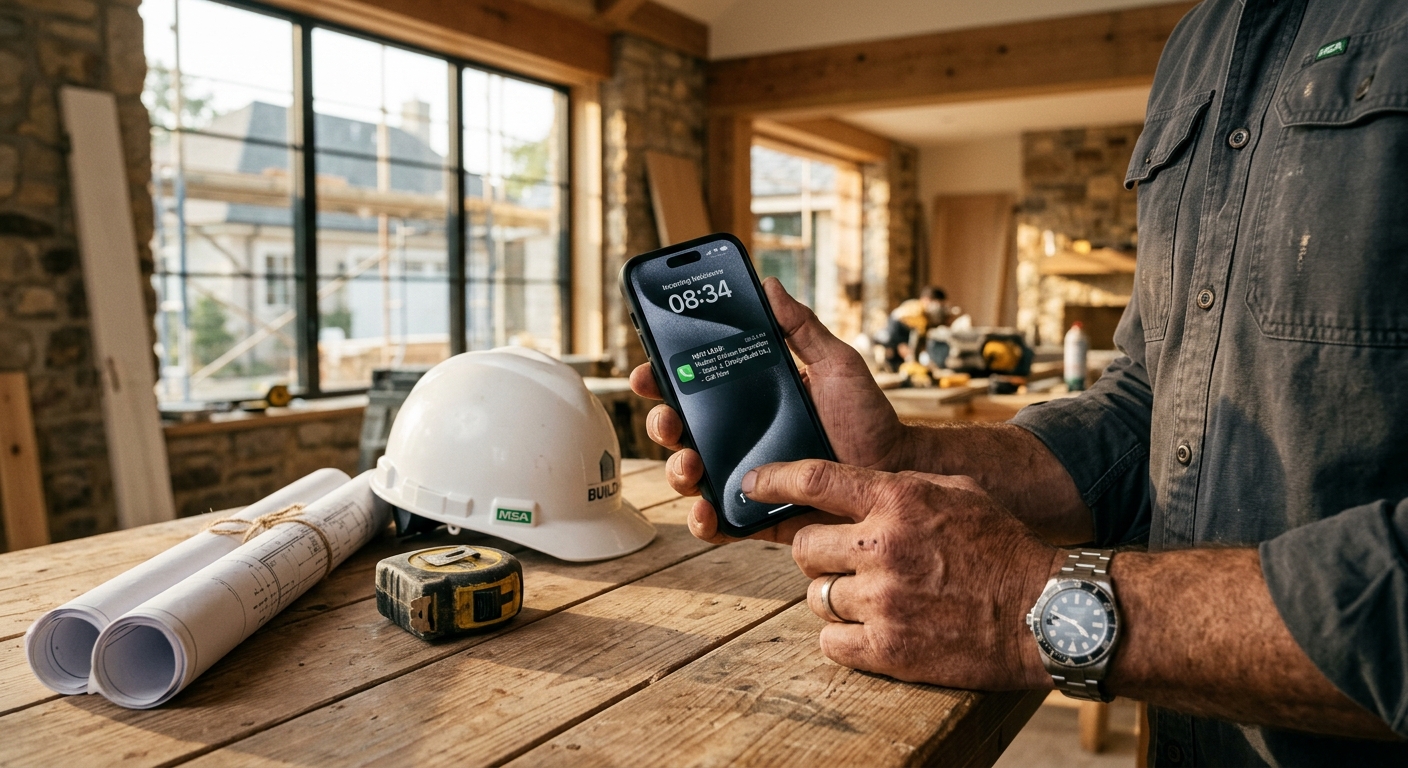
Picture this scenario. You are halfway through a tile installation, high on a ladder fixing a roof line, or underneath a kitchen sink with pipe grease on your hands. Your phone rings in your pocket. You cannot grab it in time. By the time you wipe off your hands, check your voicemail, and dial the number back twenty minutes later, the homeowner has already booked another contractor who picked up on the second ring.
This scenario plays out thousands of times every day across the country. For trade professionals and service business owners, missed calls equal lost revenue. Yet, paying forty thousand dollars or more per year for a full-time receptionist is a tough pill to swallow, especially for growing teams.
The good news is that you do not need to add another person to your payroll to capture every incoming inquiry. By modernizing how your business handles inbound communication, you can capture leads around the clock and keep your schedule full.
The Staggering Cost of a Missed Call
To understand how much revenue slips through the cracks, look at the baseline math of local service inquiries. Industry research from Invoca shows that over sixty percent of phone calls to local service businesses go unanswered or end up in voicemail.
When a customer experiences an emergency, like a leaking pipe or a broken furnace in mid-January, they rarely leave a message and wait patiently. They hang up and tap the next search result on their smartphone screen.
If your average job size is fifteen hundred dollars, missing just three qualified calls a week costs your business over two hundred thousand dollars in top-line revenue annually. Even for smaller service calls, those missed opportunities add up to substantial profit drains over twelve months.
Why Hiring a Traditional Front Desk Isn't Always the Answer
When service business owners realize they are losing calls, their instinct is often to recruit a dedicated front-desk coordinator. While a human presence is valuable, it comes with distinct structural limitations:
First, cost is a major factor. A full-time receptionist requires a competitive hourly wage, benefits, employment taxes, and physical office equipment.
Second, business hours are limited. A front-desk staff member typically works from eight in the morning until five in the afternoon. However, consumer research indicates that a huge volume of home service inquiries happen after standard business hours, specifically between six in the evening and nine at night when homeowners sit down after work to address household chores.
Third, capacity bottlenecks exist. A human receptionist can only speak to one person at a time. If two prospective clients call simultaneously during peak hours, one goes straight to voicemail.
The Power of Speed-to-Lead
Winning new work comes down to momentum and response time. Research conducted by Harvard Business Review revealed that companies attempting to contact potential customers within five minutes of an inquiry are nearly one hundred times more likely to connect and qualify the lead compared to those waiting thirty minutes.
Additional sales data from Velocify shows that responding within the first minute increases conversion rates by up to three hundred and ninety-one percent.
Modern consumers expect instant gratification. When someone fills out a contact form on your website or dials your business phone number, their buying intent is at its absolute peak. Every minute you delay lowers the probability of closing that deal.
Building an Automated Front-Desk System
Instead of adding staff overhead, high-performing service businesses use automated communication workflows. These platforms handle incoming inquiries, capture lead details, and book calls directly into your calendar without human intervention.
Here is how a modern, automated system replaces the need for a physical front desk:
- Instant Call Answering: When a phone call comes in, an intelligent AI phone assistant answers on the first ring, twenty-four hours a day, seven days a week. It speaks naturally with callers, asks pre-qualifying questions, records job details, and sends exact notes to your mobile phone.
- Integrated Website Chat: Visitors on your website often prefer text over phone calls. An automated website assistant can answer common questions about service areas, pricing structures, and availability, collecting the prospect's contact information instantly.
- Direct Calendar Booking: Rather than playing telephone tag to find an open slot, the automated system connects with your dispatch software or calendar. It allows qualified leads to select a convenient appointment time right on the spot.
- Automated Text Follow-Up: If a call happens to drop or someone fills out an online form, an instant text message can go out within seconds asking how you can help them today.
Stop Letting Profits Slip Through the Cracks
You spent years mastering your trade and building a brand. Letting potential clients slip away simply because you were busy on a job site is an avoidable loss.
By putting an automated, AI-driven call answering and lead capture platform to work for your business, you ensure that every phone call, website message, and after-hours inquiry gets answered instantly. You protect your time, lower your administrative overhead, and capture revenue that used to go directly to your competitors.
Ready to eliminate missed calls and fill your schedule automatically? Explore how an all-in-one AI phone answering and booking assistant can transform your service business today.