How Auto Repair Shops Eliminate Phone Tag with Instant Customer SMS
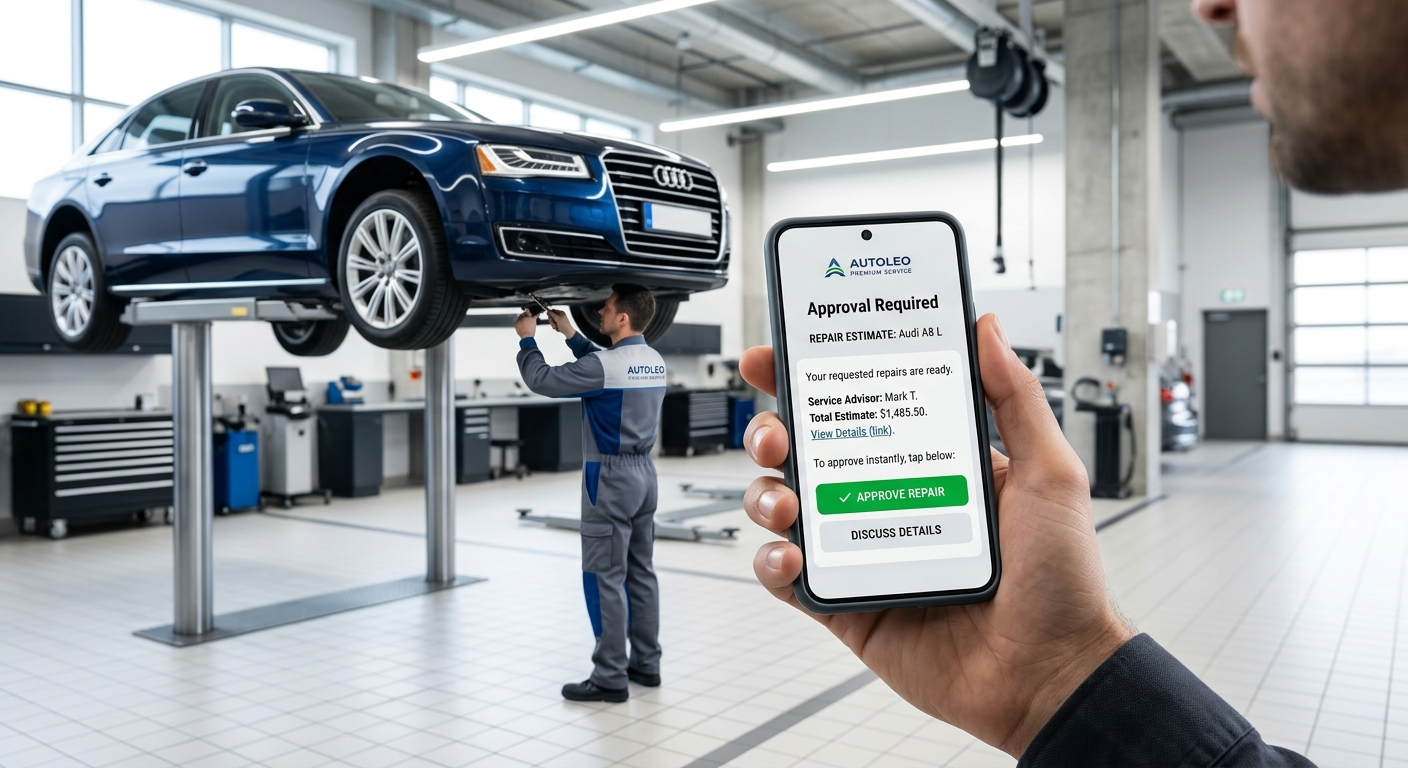
It is 8:15 AM on a Tuesday morning. The air in the service bay is filled with the sound of impact wrenches and air hoses. At the front counter, your service advisor is reviewing an invoice with a walk-in customer. At that exact moment, the shop phone rings.
Your advisor cannot answer it. The caller waits four rings, reaches a generic voicemail greeting, and hangs up. Five seconds later, that driver opens a browser search and calls the next repair shop down the street.
Two hours later, that same advisor spends twenty minutes calling three different vehicle owners to get approval for replacement brake pads. Two calls go straight to voicemail. One customer promises to call back later. Meanwhile, a lift stays occupied, a technician waits on parts clearance, and the shop schedule backs up.
This cycle is phone tag, and it quietly bleeds auto repair shops dry every single week. Fortunately, a simple shift in communication strategy is helping top-performing repair shops eliminate this friction entirely: instant customer text messaging.
The True Cost of Missed Calls and Endless Voicemails
In the auto repair industry, speed and accessibility dictate customer acquisition. When a vehicle breaks down or makes a concerning noise, the owner wants an answer quickly. They are rarely willing to leave a message and wait hours for a call back.
Industry research reveals that roughly 62 percent of calls to local service businesses go unanswered during peak business hours. Even worse, data published by Harvard Business Review highlights that businesses responding to potential leads within five minutes are nearly 100 times more likely to convert that lead than those who wait thirty minutes.
When a driver hits your voicemail, 80 percent of them will not leave a message. They move straight to your competitor. On the shop side, relying on phone calls for routine approvals creates massive operational bottlenecks. Every minute a car sits on a lift waiting for a telephone callback is revenue lost from the next job that could have been on that hoist.
Why Texting Outperforms Phone Calls for Modern Drivers
The way consumers communicate has fundamentally changed over the past decade. Most people no longer answer calls from numbers they do not immediately recognize. Spam calls have trained the public to ignore unknown callers, making traditional phone follow-ups increasingly ineffective.
Text messaging solves this barrier completely. Data from research firm Gartner indicates that SMS messages achieve open rates as high as 98 percent, with most texts being read within three minutes of receipt. Contrast that with traditional voicemail, where open and response rates often hover in the single digits.
Texting fits seamlessly into your customer's busy daily schedule. A driver cannot easily step away from an office meeting to take a five-minute phone call about a transmission flush. However, they can glance at a text message, review a brief breakdown, and reply with a quick permission to proceed within seconds.
How Instant SMS Eliminates Phone Tag
Implementing instant SMS messaging transforms how your shop handles both inbound leads and ongoing repair workflows. Here is how modern shops are leveraging this tool.
1. Instant Automated Missed-Call Text-Back
Instead of letting a missed call turn into a lost customer, smart systems trigger an automated text message the second a call goes unanswered. The text greets the caller, apologizes for missing the call, and asks how the shop can help. This instantly reassures the customer that their request is being handled, stopping them from calling rival shops.
2. Streamlined Repair Approvals
When a technician identifies additional required service during an inspection, service advisors can send a clear text message detailing the finding along with photos or short videos. The vehicle owner receives a clear, transparent update and can approve the work with a simple text reply, keeping repair bays moving without delay.
3. After-Hours Lead Capture
Vehicle problems do not strictly happen between 8 AM and 5 PM. When potential clients visit your website late at night, an automated web-to-text widget allows them to send an inquiry directly to your shop. The system responds immediately, collecting vehicle details and holding an open slot for morning drop-offs.
Actionable Steps to Upgrade Your Shop Communications
Transitioning your auto repair facility from phone-heavy operations to streamlined text communication does not require an entire operational overhaul. Focus on these practical steps:
First, establish an instant text-back process for all missed inbound phone calls. This single operational change captures leads that would otherwise vanish.
Second, shift routine status updates away from outbound phone calls. Train service advisors to send concise text updates for job completions, pickup notifications, and estimate reviews.
Third, ensure your website features an interactive chat or text option. Drivers searching on mobile devices prefer tapping a messaging button over dialing a phone number.
Finally, keep all text interactions professional, direct, and helpful. Clear communication builds trust and long-term customer loyalty.
Stop Losing Revenue to Unanswered Calls
Auto repair shops succeed on efficiency, trust, and clear communication. Continuing to rely entirely on traditional phone calls creates unnecessary delays, frustrated customers, and empty repair bays.
By replacing voicemail and endless callbacks with instant, automated SMS communications, your shop can capture every inbound lead, speed up repair approvals, and build a frictionless experience that keeps drivers coming back.
If you want to stop losing money to missed calls and slow responses, consider upgrading to an intelligent 24/7 AI phone-answering and website-chatbot platform. These automated solutions capture calls, text lost leads back instantly, and book service appointments directly into your schedule, ensuring your shop never misses another opportunity.