How Auto Repair Shops Eliminate Phone Tag with Instant Customer SMS
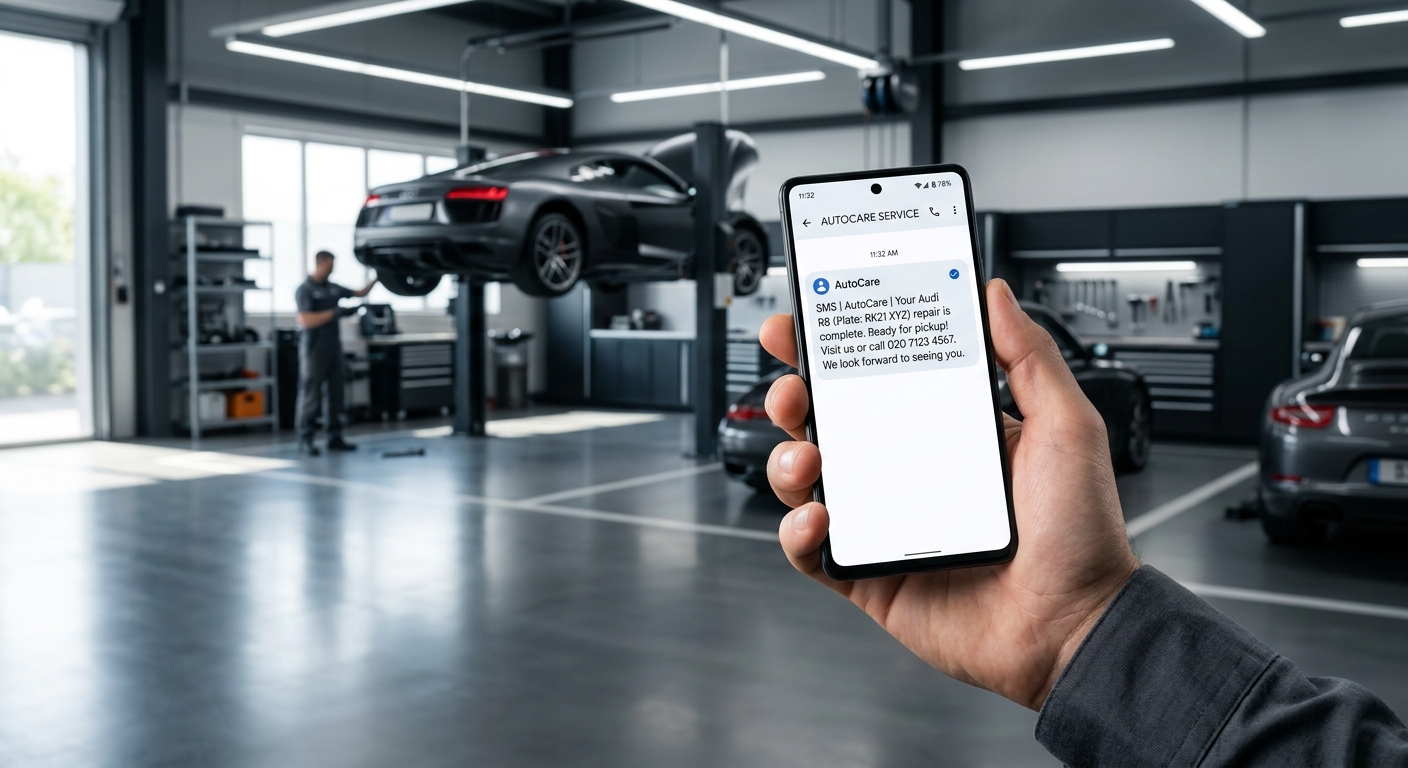
It is 8:30 AM on a Tuesday. Your service advisor is handing over keys to a customer while explaining a brake pad replacement. In the bay, two technicians are working under lifts with air tools blasting. The main phone line rings. Then it rings again. Nobody can answer it.
That ringing phone represents a driver down the street whose check engine light just came on, or someone looking to schedule a major transmission service. When that call hits your voicemail, what does that driver do? They hang up and call the next independent repair shop listed on Google.
In the automotive service industry, phone tag is a silent profit killer. Every missed call is a missed repair order, often worth anywhere from $300 to over $1,500 in immediate revenue, not to mention the long-term lifetime value of a loyal customer. Fortunately, auto repair shops are putting an end to phone tag by using instant customer SMS.
The Brutal Math of Missed Calls in Independent Repair Shops
According to research from Harvard Business Review, companies that attempt to contact potential customers within five minutes of an inquiry are nearly 100 times more likely to connect and qualify them compared to waiting 30 minutes. In the automotive sector, that response window is often even tighter. Drivers searching for auto repair usually have an immediate problem and want a quick resolution.
Consider the operational reality of an independent shop. A typical three-bay or four-bay shop receives dozens of inbound calls a day. These calls range from simple status updates ("Is my F-150 ready yet?") to complex price estimates and immediate drop-off requests.
When your front desk staff is swamped, answering every incoming call becomes physically impossible. If 20% of your daily calls go to voicemail, and half of those callers never leave a message or respond to a callback, you could easily be bleeding thousands of dollars in lost gross revenue every single week.
Why Voicemail Fails Modern Drivers
For decades, auto shops relied on answering machines and voicemail to catch missed traffic. Today, voicemail is effectively dead for customer acquisition. Studies consistently show that over 80% of callers sent to voicemail will not leave a message. They simply drop off.
When a customer does leave a voicemail, the phone tag game begins. Your service writer calls them back 45 minutes later, but now the customer is in a meeting or driving. Your writer leaves a voicemail. The customer calls back an hour later while your writer is helping someone at the counter. The cycle repeats until the customer gives up or takes their vehicle somewhere else.
Text messaging eliminates this friction entirely. Industry statistics reveal that text messages boast an open rate of roughly 98%, with the vast majority of texts opened within three minutes of delivery. Drivers may not answer a phone call from an unknown number or listen to a minute-long voicemail, but they almost always read a quick text message on their lock screen.
How Instant Missed-Call Text-Back Works
The solution to phone tag is straightforward: replace voicemail drop-offs with immediate, automated text communications.
Here is how an instant SMS workflow transforms shop operations:
- The Missed Call Trigger: A customer calls your shop while your team is busy or after hours. The call goes unanswered after four rings.
- The Instant Text: Within five seconds of the call ending, the platform automatically sends a customized text message to the caller's mobile phone. For example: "Hi! Thanks for calling [Shop Name]. We are currently helping another driver or under a vehicle. How can we help you with your car today?"
- The Immediate Conversation: The customer replies via text with their specific need, such as asking for a quote on new tires or booking a synthetic oil change.
- Streamlined Capture: The system captures the details, allowing your service team to respond via a central dashboard when they have a free moment, or allowing an automated system to book the appointment on the spot.
By turning a missed phone call into an active text conversation within seconds, you freeze the customer's search. They stop calling competitor shops because they know you are already handling their request.
Three Practical Takeaways for Your Shop
If you want to eliminate phone tag and capture more repair orders, start by implementing these practical steps today:
- Automate Missed-Call Responses Immediately: Never let a missed call sit in silence. Ensure every unanswered call triggers an instant text message asking how you can assist them.
- Allow Customers to Text for Appointments: Make it easy for drivers to request drop-off times or ask quick questions without needing to hold on the line. Adding "Text Us" options to your website and Google Business Profile instantly increases lead volume.
- Centralize Team Communication: Use a shared dashboard where all text conversations are visible to your front-desk staff. This ensures that any available service advisor can step in, view the conversation history, and close the booking without duplicating effort.
Never Lose Another Repair Order to a Ringing Phone
Your mechanics are built to fix cars, not play phone tag. Relying on traditional voicemail or expecting front-desk staff to field every single phone call during peak hours guarantees that revenue will slip through the cracks.
By adopting instant SMS technology, auto repair shops convert missed calls into active conversations, schedule more appointments, and build immediate trust with local vehicle owners.
To take this even further, modern AI phone-answering and website-chatbot platforms handle incoming calls around the clock. These intelligent systems answer common questions, collect vehicle details, automatically text back missed callers, and book appointments directly into your schedule. They ensure your shop never misses another customer inquiry, whether you are under a hood or closed for the weekend.